


What Does IP68 Protection Mean for a Deep Well Pump?
Views: 0 Author: Site Editor Publish Time: 2026-11-17 Origin: Site


The ingress protection (IP) system operates as a strict international standard. Governed by IEC 60529, it assesses how equipment withstands harsh environmental factors. When you deploy electrical equipment deep underground, this standard becomes absolute law. Choosing a subpar protection rating in a borehole environment routinely leads to catastrophic equipment failure. You then face massive extraction costs and lengthy operational downtime. Groundwater applies immense hydrostatic pressure against every single motor seal. It actively seeks weak points around cable joints and casings.
We created this comprehensive guide to help facilities managers and engineers navigate these precise risks. You will learn how to accurately differentiate between flashy marketing claims and actual operational reliability for a Deep Well Pump. We will decode the testing parameters of the IP68 standard in plain language. You will discover why laboratory testing often fails to mirror real-world deployment. By the end of this article, you will know exactly how to verify manufacturer specifications. This knowledge ensures your next installation remains secure, dry, and continuously operational.
Key Takeaways
IP68 Standardized Definition: What it strictly means regarding dust-tightness and continuous water submersion.
Operational Reality vs. Lab Conditions: Why deep well pressure varies by depth and how "testing" differs from "real-world deployment."
System Integration: How IP68 relies on cable seals and motor insulation (Class B) to maintain integrity.
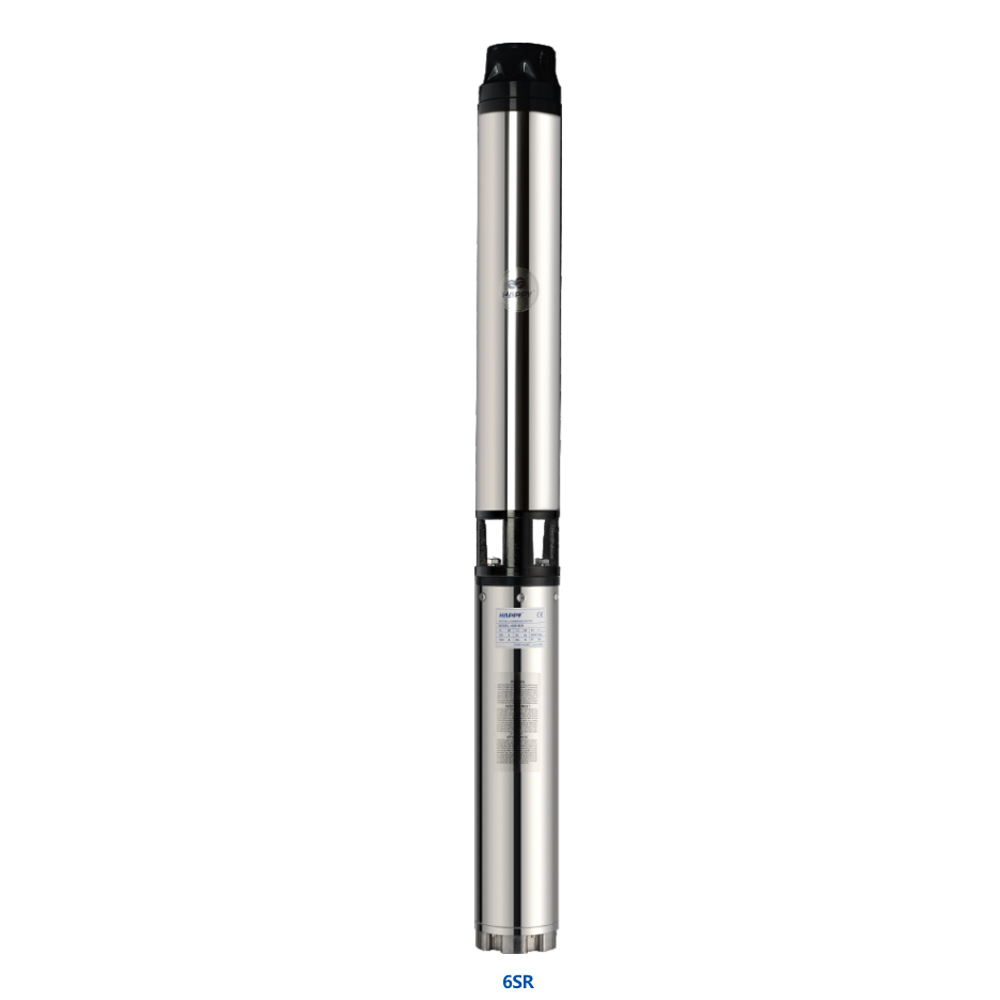
Decision Framework: How to verify compliance before purchasing a 6SR deep well pump or similar hardware.
Decoding IP68: Beyond the Marketing Claims
Engineers often misunderstand the exact definitions behind ingress protection ratings. The IP code utilizes a two-digit system to define environmental resilience. The first digit represents protection against solid particles. A number "6" indicates the enclosure is entirely dust-tight. A vacuum must not draw any dust into the unit during rigorous laboratory testing. This dust-tight nature proves essential for borehole equipment. It prevents abrasive silt and microscopic sand from destroying delicate internal motor bearings.
The second digit evaluates moisture and water protection. An "8" signifies protection against continuous high-pressure water submersion. However, many buyers fail to realize a critical technical nuance here. The leap from IP67 to IP68 represents a massive shift in engineering requirements. IP67 only guarantees protection during temporary immersion up to one meter for thirty minutes. You cannot rely on IP67 for permanent underground installations. IP68 mandates continuous submersion capabilities under much harsher conditions.
You must also understand the "Manufacturer's Specification" caveat embedded within IEC 60529. The standard does not prescribe a universal depth or duration for the number 8. Instead, it requires the manufacturer to explicitly define these parameters. The specified conditions must simply exceed the requirements of IP67. One company might define IP68 as three meters of depth for 24 hours. Another might define it as 150 meters continuously for ten years. You must always read the technical documentation. Never assume a generic IP68 sticker guarantees deep-set survival.
Common Mistake: Treating all IP68 ratings as equal. Always demand the exact testing depth and duration from your supplier before authorizing a purchase.
Why IP68 is Critical for Submersible Pumps
Deep well environments subject hardware to extreme physical forces. Hydrostatic pressure increases linearly as you lower equipment deeper into the earth. For every ten meters of depth, hydrostatic pressure increases by approximately one bar (14.5 psi). If you install equipment at 150 meters, the casing experiences 15 bar of crushing pressure. This intense force constantly tries to push water past the mechanical seals. A true IP68 rating ensures the enclosure can physically resist these immense hydrostatic forces.
Physical ingress protection represents only half the battle. Electrical integrity forms the second crucial pillar. If minor moisture breaches the outer casing, the internal electrical components must survive. This is where a Class B Insulation Motor proves incredibly vital. Class B insulation safely tolerates operating temperatures up to 130°C (266°F). Motors generate significant heat during continuous extraction cycles. Heat causes internal air and fluids to expand. This thermal expansion places additional stress on external seals. Strong insulation maintains electrical safety while the IP68 casing blocks physical water entry. They work in tandem to prevent disastrous electrical shorts.
Groundwater also introduces severe chemical threats. Pure water rarely exists in deep boreholes. You typically encounter harsh dissolved minerals, fluctuating pH levels, and suspended abrasive sand. An IP68-rated seal must resist rapid chemical degradation. Standard rubber gaskets harden and crack when exposed to heavy chlorides or acidic water. High-quality submersible equipment utilizes specialized elastomers like Viton or Nitrile rubber. These materials maintain their sealing integrity despite constant exposure to corrosive elements.
Table 1: Environmental Factors and Required Protection Elements
Environmental Factor | Impact on Hardware | Required Design Feature |
|---|---|---|
Hydrostatic Pressure | Forces water into electrical enclosures | True IP68 casing (depth-rated) |
Thermal Expansion | Stresses mechanical seals from the inside | High-grade motor insulation (Class B) |
Suspended Sand | Abrades outer casings and ruins gaskets | IP6X dust-tight mechanical seals |
Chemical Corrosion | Degrades standard rubber O-rings over time | Chemical-resistant elastomer compounds |
Evaluating 6SR Deep Well Pumps: Compliance and Certification
Smart engineers operate on a philosophy of "trust, but verify." When evaluating industrial hardware, you cannot accept marketing brochures at face value. You must request official test reports proving IEC 60529 compliance. A legitimate manufacturer will gladly provide documentation detailing their specific testing methodologies. They will show you the exact chamber pressures used to simulate borehole depths. This transparency separates premium industrial equipment from cheap commercial alternatives.
You must carefully recognize the difference between genuine testing and generic labeling. Many consumer products boast "waterproof" badges. These labels carry zero weight in industrial fluid management. A generic waterproof label usually indicates a basic splash-proof or shallow-water design. When you evaluate a 6SR Deep Well Pump, you look for structural integration. True IP68 compliance relies heavily on how different components join together.
Cable gland seals represent a primary failure point. The spot where the power cable enters the motor housing faces extreme vulnerability. Legitimate IP68 designs use double-sealed cable glands filled with specialized potting compounds. This prevents water from wicking down the internal copper strands into the motor. Mechanical seal durability also dictates compliance success. Premium models feature silicon carbide dual mechanical seals. These hard-wearing seals block pressurized water while allowing the drive shaft to spin freely. If a manufacturer uses cheap carbon seals, the IP68 rating will likely fail within months.
Best Practice: Always check the nameplate data physically riveted to the equipment. It should list the exact IP rating alongside the maximum submersion depth limit.
Implementation Realities and Failure Risks
Even the finest hardware fails if poorly implemented. Human error during installation frequently voids expensive IP68 ratings. Many operators assume the protection rating covers the entire electrical run. In reality, the factory IP rating ends exactly at the power cable connection point. Improper cable splicing accounts for a massive percentage of underground failures. If an installer uses standard electrical tape or basic heat shrink, water will inevitably breach the connection.
You must use specialized submersible cable splicing kits. These kits utilize epoxy resin or heavy-duty mastic to recreate an IP68 barrier around your joint. Junction boxes near the wellhead also present serious risks. If surface water floods a poorly sealed junction box, moisture can travel straight down the cable jacket. This capillary action destroys the motor from the inside out, completely bypassing the external seals.
Maintenance cycles directly influence survival rates. Seals degrade naturally over time. An IP68 rating does not guarantee eternal life. Oil-filled motor chambers require periodic inspection. If the internal oil turns milky, the mechanical seal has begun allowing water ingress. You must balance strategic trade-offs during procurement. High-specification ingress protection costs more upfront. However, you must weigh this against the devastating cost of failure.
Consider the realities of borehole retrieval. Pulling a heavy unit up 100 meters requires specialized crane trucks, expensive labor, and days of system downtime. A reliable IP68 Submersible Pump prevents these disastrous scenarios.
Here are the three most common implementation failures:
Failing to properly cure epoxy resin in underground cable splices.
Dropping the unit by its power cable, which compromises the factory gland seal.
Ignoring the manufacturer's maximum submersion depth limit.
Decision Checklist: Selecting Your Next Pump
Procuring reliable underground equipment requires a methodical approach. You need a strict framework to evaluate potential hardware. Do not let sales teams rush your decision-making process. Use this checklist to enforce strict engineering standards.
Mandatory Criteria:
Manufacturer-confirmed depth rating: The specification sheet must state exact testing limits. Look for phrases like "Tested to 100m continuous submersion."
Verified IEC 60529 documentation: Ask for the third-party testing certificate. Verify the testing facility holds proper ISO accreditation.
Electrical controls compatibility: Ensure the unit meets strict insulation standards. Verify the motor utilizes Class B or higher temperature ratings to manage thermal expansion.
Heavy-duty cable integration: Check the factory-installed cable length. A longer factory cable reduces the need for risky underwater splices.
Red Flags to Avoid:
Vague marketing terminology: Discard products labeled simply as "submersible" or "waterproof" without a specific numerical IP classification.
Missing material data: If the brochure does not explicitly list the elastomer compounds used for O-rings and gaskets, walk away.
Unrealistic warranties: Be wary of excessively long warranties on units that lack transparent engineering data. A warranty will not cover extraction labor costs when the unit fails.
Plastic casing components: True deep-set hardware utilizes stainless steel or cast iron. Plastic deforms under severe hydrostatic pressure.
Conclusion
Protecting underground fluid extraction systems requires uncompromising attention to detail. For any deep well environment, an IP68 rating operates as a strict operational requirement, never just a premium feature. The intense hydrostatic pressures and corrosive elements present in groundwater will quickly destroy inferior equipment. You must look beyond standard marketing brochures. Always treat the manufacturer’s technical data sheet as your ultimate source of truth.
Verify exact submersion depth limits and request IEC testing documentation before finalizing any purchase. Pay close attention to system integration points, especially cable glands and mechanical seals. Insist on proper insulation ratings to handle internal thermal stress safely. By prioritizing long-term seal integrity and demanding third-party validation, you drastically reduce failure rates. Proper diligence upfront ensures your extraction systems run reliably for years, saving you from disastrous retrieval operations.
FAQ
Q: What is the difference between IP67 and IP68 for my pump?
A: IP67 only protects against temporary, shallow-water immersion (up to one meter for 30 minutes). IP68 guarantees protection for continuous, high-pressure submersion. For deep boreholes, you strictly need the continuous protection of IP68 to survive immense hydrostatic pressure.
Q: Does IP68 protect against all chemical contaminants?
A: No. IP ratings specifically measure resistance to solid particles (dust/sand) and water. They do not certify chemical resistance. You must verify that the gaskets and outer casing materials can withstand your specific groundwater chemistry, such as high chlorides or low pH.
Q: How do I verify if a pump is truly IP68-rated?
A: You should check the physical metal nameplate riveted to the motor housing. Additionally, request the manufacturer's official technical data sheet and ask for third-party ISO/IEC 60529 test certificates proving their specific depth and duration claims.
Q: Can a cable splice break an IP68 rating?
A: Yes. The factory IP68 rating ends exactly where the power cable terminates. If you execute a poor underwater splice using basic tape, water will breach the connection. You must use specialized resin-filled submersible cable splice kits to maintain system integrity.


