


What Size Pump Do I Need For A Deep Well?
Views: 0 Author: Site Editor Publish Time: 2026-07-02 Origin: Site


Replacing or installing a deep well pump is a high-stakes, labor-intensive investment. You rely entirely on this vital equipment to deliver daily water safely and consistently. Guessing the necessary pump size leads directly to either inadequate water pressure or premature motor burnout. We often see well owners simply select horsepower based on their old unit. This habit creates constant headaches, especially when water abruptly drops out mid-shower. It also risks destroying internal components long before they should fail. In this guide, you will learn a standardized, math-based framework to calculate exact sizing requirements. We will show you how to measure true household demand accurately. We will also explain how to factor in well depth to choose the perfect system. You will finally understand how to match the right equipment to your specific property parameters.
Key Takeaways
- Size isn't just horsepower: A correctly sized deep well pump is determined by matching your required flow rate (Gallons Per Minute or GPM) with the well's Total Dynamic Head (TDH).
- Bigger is not always better: Oversizing a pump causes "short-cycling," which severely reduces the lifespan of the pump motor.
- The 1 GPM Rule: Most residential sizing starts by calculating 1 GPM of flow capacity for every water fixture in the home.
- Pump performance curves are definitive: The final purchasing decision should be based on the manufacturer’s specific pump curve chart, not just generalized horsepower ratings.
The Hidden Costs of Incorrect Deep Well Pump Sizing
Many buyers assume higher horsepower solves all water problems. This represents a dangerous misconception. You must size equipment accurately to avoid rapid system failure. Let us examine the immediate consequences of improper sizing.
The Under-Sized Pump (Capacity Deficit)
An under-sized unit fundamentally lacks the capacity to meet peak household demand. You will quickly notice the primary symptom: severe pressure drops. Imagine showering while a family member starts the dishwasher. The water pressure immediately slows to a trickle. Behind the scenes, the outcome is highly destructive. The motor strains continuously to catch up to the demand. It runs non-stop, overheating the internal mechanisms. Constant motor strain leads directly to premature equipment failure.
The Over-Sized Pump (Short-Cycling Risk)
An over-sized unit presents an equal danger to your plumbing infrastructure. We call this the short-cycling risk. A massive pump fills your pressure tank much too quickly. The primary symptom involves rapid activation. The system turns on and off in rapid bursts. We know short-cycling destroys electrical components rapidly. It accelerates wear on the start capacitor. It aggressively degrades the motor windings. Manufacturers will void warranties when they identify short-cycling damage. You ultimately face early replacement requirements.
Step 1: Calculate Your Peak Household Demand (GPM)
You need a precise baseline flow rate. We measure this metric in Gallons Per Minute (GPM). Calculating peak demand ensures you never run out of water during busy mornings. You must evaluate your property thoroughly.
The Fixture Count Method
Industry professionals rely on the Fixture Count Method. We use it to establish a dependable baseline flow.
- Walk through your entire property inside and out.
- Count every single water-drawing fixture.
- Include sinks, showers, toilets, and dishwashers in your tally.
- Count washing machines and all outdoor spigots.
- Allocate exactly 1 GPM per counted fixture to determine peak demand.
Consider a standard three-bathroom home as an example. You count 12 total fixtures across the property. You require a minimum 12 GPM flow rate. This simple mathematics prevents dangerous capacity deficits.
Factoring in Continuous Demand
You must also factor continuous demand into your final number. Look for high-draw applications running for extended periods. Irrigation systems demand massive water volumes. Heat pumps require steady, unbroken flow. Whole-house water filtration systems need high GPM for their backwashing cycles. Determine if these systems operate concurrently during your normal morning or evening routines. You must adjust your baseline GPM requirement upward to safely accommodate simultaneous usage.
Step 2: Determine Total Dynamic Head (TDH)
Depth matters far more than horizontal distance. Lifting water vertically fights gravity directly. This action requires significantly more energy than pushing water across a flat lawn. You must calculate Total Dynamic Head (TDH) accurately. This crucial metric represents the total resistance your equipment must overcome.
Core TDH Calculation Variables
To establish your TDH, you must identify several specific measurements. You can find most of these numbers on your original well log.
| Variable Name | Definition & Impact |
|---|---|
| Static Water Level | The resting depth to the water surface when the unit is off. Found easily on the driller's well log. |
| Drawdown Level | The vertical distance the water level drops while active pumping occurs. |
| Elevation Lift | The vertical distance from the wellhead to the highest plumbing fixture inside your house. |
| Friction Loss | Internal pipe resistance. It varies based on the diameter and total length of the drop pipe. |
| Service Pressure | Your desired indoor pressure. Calculated as 1 PSI = 2.31 feet of head. A 50 PSI tank requires 115 feet of head. |
Actionable TDH Formula
You combine the variables above using a straightforward formula. We recommend using a structured calculation chart to avoid errors.
| Calculation Step | Value (Feet) |
|---|---|
| 1. Enter Drawdown Level | [___] ft |
| 2. Add Elevation Lift | + [___] ft |
| 3. Add Friction Loss | + [___] ft |
| 4. Add Service Pressure (PSI x 2.31) | + [___] ft |
| Total Dynamic Head (TDH) | = [___] Total ft |
Step 3: Translating GPM and TDH into Motor Horsepower (HP)
Once you know your exact GPM and TDH, you choose the motor size. You must read a pump performance curve. Every reputable manufacturer provides these charts.
Reading a Pump Performance Curve
You navigate the chart by plotting your two calculated numbers. The horizontal axis represents flow rate (GPM). The vertical axis shows Total Dynamic Head (TDH). You trace lines from both axes to find their intersection point. Identify where the intersection falls inside the manufacturer's operational zones. This specific zone dictates your precise horsepower requirement. Residential settings typically range from ½ HP to 2 HP. You should never guess this variable. The curve tells you exactly what kind of deep well pump you require for reliable daily operation.
Why Submersible Pumps Dominate Deep Wells
We consistently recommend submersibles for deep environments. Jet systems pull water upward from the surface. They lose mechanical efficiency very quickly past 25 feet. Conversely, submersible units push water directly from the bottom. Pushing is fundamentally more energy-efficient than pulling. Therefore, a submersible deep well pump remains mandatory for depths reaching up to 400 feet or more. Their mechanics are ideally suited for extreme vertical lifts.
Crucial Implementation and Compatibility Checks
You calculated the performance specs perfectly. Now you must ensure physical compatibility. Overlooking these checks leads to disastrous installation failures.
Well Casing Diameter Constraints
The most critical physical constraint is well casing diameter. The actual unit must slide down the pipe smoothly. It requires adequate clearance for cooling water flow. Most residential models require a four-inch minimum casing. Always verify your existing casing width before ordering any equipment.
Electrical Wire Sizing (Voltage Drop)
Electrical wire sizing is equally vital. Deep installations require extremely long electrical wire runs. Using undersized wire causes severe voltage drops. Voltage drop starves the motor of energy. Deeper settings mandate heavier gauge wire. You must consult an electrical voltage drop chart. Match your wire gauge perfectly to prevent motor destruction.
Control Box Match
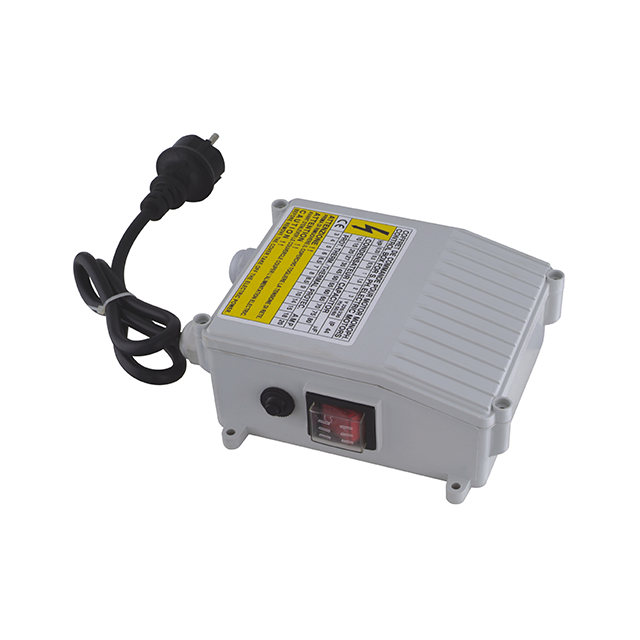
Control box matching presents another strict requirement. Three-wire setups utilize a separate wall-mounted control box. This box contains essential start capacitors and relays. It must match the exact HP and voltage of your selected unit. Mismatching the control box leads directly to immediate electrical failure upon startup.
Decision Point: Constant Pressure Systems vs. Standard Pressure Tanks
You face a final system design choice. You must select the control logic governing water delivery.
Standard Systems (On/Off)
Standard systems operate on simple mechanical logic. They utilize a traditional 40-60 PSI pressure switch. Water pressure drops to 40 PSI, turning the unit on. It fills the tank to 60 PSI, turning it off. These setups are highly reliable and simple to maintain. They suit predictable water usage perfectly. We highly recommend them for budget-conscious replacements.
Constant Pressure (VFD) Systems
Constant pressure systems operate entirely differently. They incorporate a Variable Frequency Drive (VFD). The VFD adjusts motor speed continuously. It matches real-time demand dynamically. You turn on one faucet, and the motor spins slowly. You turn on three showers, and the motor speeds up to compensate. They provide city-like water pressure everywhere inside your home. They excel in variable irrigation setups. They also protect low-yield wells from aggressive over-pumping. They do require a higher upfront investment, but the performance benefits are massive for high-demand households.
Conclusion
Proper equipment sizing guarantees reliable water pressure and maximizes hardware longevity. Take these action-oriented next steps to finalize your project.
- Locate your original well log (driller’s report) immediately. Verify the static water level and casing diameter before taking any further action.
- Recalculate your household GPM and property TDH meticulously using the formulas provided above.
- Use your calculated GPM and TDH as a firm baseline when speaking to vendors. This prevents unwanted upselling.
- Verify final electrical wiring and plumbing compatibility with a certified well contractor. Their professional validation ensures long-term safety.
FAQ
Q: Can I put a 1 HP pump in a shallow well?
A: No. Using a high-HP unit for shallow applications causes extreme short-cycling. It pressurizes the system too rapidly, turning off and on constantly. This action severely damages the pressure system and guarantees early motor failure.
Q: How do I know the depth of my well if I don't have the well log?
A: You can contact your local health department or state geological survey. They frequently keep historical well drilling records on file organized by property address. A certified driller can also measure it manually.
Q: Does a deeper well automatically require a higher GPM pump?
A: No. GPM dictates volume based strictly on household fixture demand. Depth dictates the horsepower (TDH) needed to lift that volume vertically. You must calculate these two metrics completely separately.
Q: How many gallons per minute is considered a "good" deep well?
A: A yield of 5 to 10 GPM is standard for modern residential needs. This volume works perfectly provided there is adequate storage in the well casing or you install a properly sized pressure tank.


