


End Suction Vs Inline Pumps: Which One Is Better for Your System?
Views: 0 Author: Site Editor Publish Time: 2025-11-29 Origin: Site


Introduction
Choosing the right pump can make or break your system’s efficiency. End Suction and Inline Pumps are two popular choices, but which one is best for your needs?
In this article, we’ll explore the key differences between these pumps. You’ll learn about their performance, space requirements, and maintenance needs to help you make an informed decision.
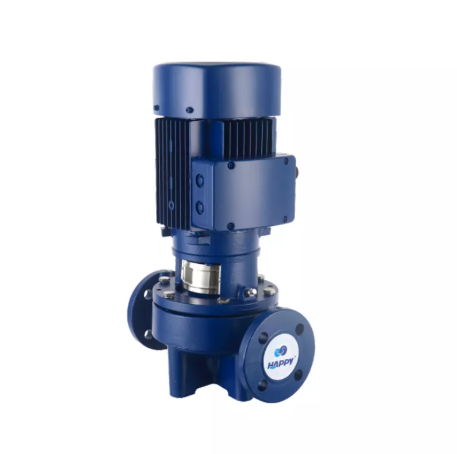
Design Differences: End Suction vs Inline Pumps
Construction and Layout
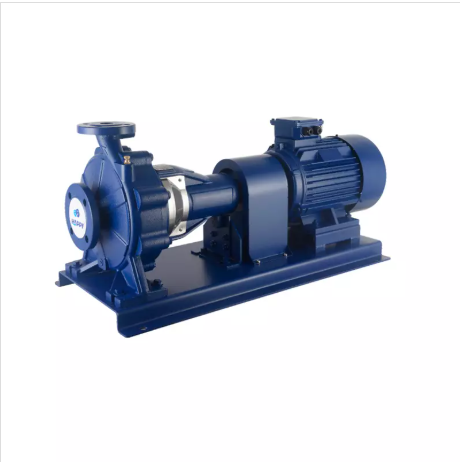
End Suction Pumps typically feature a horizontal shaft, which requires more space for installation. The motor is usually mounted separately from the impeller, connected by a coupling. This design, while providing stability, also means that End Suction Pumps need a solid foundation and extra space for additional components like pipes, bends, and valves. The back pull-out design allows for easy maintenance, as it provides quick access to internal parts without having to disassemble the entire system.
On the other hand, Inline Pumps have a more compact design. They feature a vertical shaft, and the motor is directly coupled to the impeller, eliminating the need for separate couplings. This means Inline Pumps take up less floor space and are well-suited for installations in tighter spaces. Their streamlined design also makes them simpler to install in confined areas such as mechanical rooms or mobile units. If your available installation space is limited, Inline Pumps offer a great solution due to their compact design and efficient use of space.
How Fluid Flow is Managed
End Suction Pumps utilize a more traditional L-shaped flow path. The fluid enters the pump horizontally and is then directed through the impeller, exiting vertically. This design is effective for handling high fluid volumes but can cause turbulence at lower flow rates, which may reduce efficiency in certain cases.
Inline Pumps, in contrast, offer a straight-through flow path. The fluid enters and exits along the same axis, ensuring a smoother flow with minimal turbulence. This streamlined design improves fluid movement and enhances efficiency, particularly in applications requiring continuous, consistent flow, such as in cooling systems or water circulation processes. If fluid flow stability and reduced turbulence are crucial for your application, Inline Pumps will likely offer better efficiency than End Suction Pumps.
| Feature | End Suction Pumps | Inline Pumps |
|---|---|---|
| Shaft Orientation | Horizontal | Vertical |
| Space Requirements | Requires more space for installation | Compact, space-saving design |
| Motor Design | Motor mounted separately from impeller | Motor directly coupled to impeller |
| Installation Complexity | Requires additional couplings and setup | Simplified installation due to direct coupling |
| Maintenance | Easier to access parts for maintenance | More complex, harder to access components |
| Footprint | Larger footprint | Smaller footprint |
Performance Comparison: Flow, Pressure, and Efficiency
Flow Rate and Pressure Handling
For applications requiring high flow rates, End Suction Pumps are typically the better choice. These pumps are designed to handle large volumes of fluid at higher pressures, making them ideal for systems that need to maintain high flow rates and withstand high-pressure conditions. For example, End Suction Pumps are commonly used in municipal water distribution systems and industrial applications where large quantities of fluid are constantly being circulated.
In contrast, Inline Pumps are better suited for moderate flow applications. Their design is optimized for lower-pressure environments, where fluid circulation is important but large volumes are not required. These pumps are excellent for tasks such as circulating water in HVAC systems or providing booster pumps in industrial settings. If your system needs to manage large volumes of fluid and operate at higher pressures, End Suction Pumps will provide the best performance. For moderate flow applications, Inline Pumps will be more efficient.
| Pump Type | Best for Flow Rate | Best for Pressure Handling | Example Applications |
|---|---|---|---|
| End Suction | High flow rates | High pressure environments | Municipal water distribution, industrial processes |
| Inline Pumps | Moderate flow rates | Moderate pressure environments | HVAC systems, water circulation |
Energy Efficiency at Different Flow Rates
When it comes to energy efficiency, End Suction Pumps are more efficient in high-flow scenarios. However, at lower flow rates, their performance can drop significantly, leading to higher energy consumption. This is a key consideration if your system experiences fluctuations in fluid demand or operates below its optimal flow rate for long periods.
Inline Pumps perform better at lower flow rates, as their design minimizes friction losses. The smooth, straight flow path allows them to operate efficiently at reduced flow, which is a key advantage for systems like HVAC, where the pump is often running at low capacity during off-peak hours. If your system operates at variable or low flow rates, Inline Pumps will be more energy-efficient in the long term.
| Pump Type | Efficiency at High Flow Rates | Efficiency at Low Flow Rates |
|---|---|---|
| End Suction | Efficient | Decreases significantly at low flow rates |
| Inline Pumps | Efficient at low flow rates | Highly efficient, reduces energy consumption |
Maintenance and Durability: Ease and Longevity
Maintenance Accessibility
End Suction Pumps are easier to maintain due to their simpler design. The horizontal setup allows for easy access to the pump’s internal components, such as the impeller, bearings, and seals. The back pull-out design also ensures that maintenance tasks, like replacing parts or inspecting components, can be done without disassembling the entire system, reducing downtime and effort.
Inline Pumps, however, require more effort to service. Their compact and integrated design means that internal parts are harder to access. The motor often needs to be removed from the casing to reach the impeller, bearings, and seals. While Inline Pumps may need less frequent maintenance, the maintenance process is more involved and time-consuming. If maintenance access is a top priority, End Suction Pumps are more convenient due to their easy-to-reach components.
Expected Lifespan
End Suction Pumps tend to have a longer lifespan, typically lasting between 20,000 to 60,000 hours. Their robust design and fewer parts prone to wear and tear contribute to this extended lifespan. Regular maintenance helps ensure their continued reliability over time.
Inline Pumps, on the other hand, have a shorter lifespan of about 10,000 to 20,000 hours. While they are generally durable, their more complex construction and higher frequency of repairs contribute to a reduced lifespan. However, Inline Pumps tend to require less overall maintenance, which helps offset the need for more frequent repairs. If you are looking for a pump with longer durability and fewer overall repairs, End Suction Pumps are a more reliable option for long-term use.
| Pump Type | Maintenance Ease | Expected Lifespan | Maintenance Frequency |
|---|---|---|---|
| End Suction | Easier access, simple design | 20,000 to 60,000 hours | Less frequent, easier to maintain |
| Inline Pumps | More complex, requires motor disassembly | 10,000 to 20,000 hours | More frequent, but simpler overall |
Application Suitability: Which Pump is Right for Your Needs?
Best Applications for End Suction Pumps
End Suction Pumps excel in high-flow applications where large volumes of fluid need to be moved. These pumps are perfect for use in water treatment plants, irrigation systems, and industrial processes, such as chemical handling or pumping wastewater. Their ability to handle high pressures and large fluid volumes makes them an excellent choice for demanding applications that require continuous operation.
For instance, in a large-scale industrial system, End Suction Pumps can efficiently circulate water or other fluids in systems where high flow rates are necessary to maintain process efficiency. If your application involves high-volume fluid handling or high-pressure environments, End Suction Pumps will likely perform better.
Best Applications for Inline Pumps
Inline Pumps are ideal for applications with space constraints and moderate flow rates. These pumps are commonly used in HVAC systems, cooling systems, and industrial applications requiring fluid circulation at lower pressures. Their compact design makes them perfect for installations where space is limited, such as tight mechanical rooms or mobile equipment setups.
For example, Inline Pumps are often used in heating and cooling systems to circulate chilled water or condenser water, offering a compact solution for managing flow in confined spaces. If you need to maximize space efficiency and handle moderate flow rates, Inline Pumps are a more suitable choice for your system.
Practical Examples
When choosing between End Suction Pumps and Inline Pumps, real-world applications can help clarify which is best suited for your needs. For example, End Suction Pumps are commonly used in large-scale industrial systems like water treatment plants, where high flow rates and high-pressure handling are essential. These pumps can move large volumes of water through complex pipelines, making them perfect for large infrastructures.
On the other hand, Inline Pumps are ideal for space-constrained systems, such as HVAC installations in commercial buildings or smaller industrial setups. Their compact design allows them to be easily integrated into tight spaces without compromising efficiency, making them a go-to choice for applications that require consistent, moderate fluid circulation with lower energy consumption.
Cost Breakdown: Upfront and Long-Term Costs
Initial Purchase Costs
In terms of upfront costs, End Suction Pumps are generally more affordable. They are available in various sizes and configurations, making them a flexible and cost-effective solution for many applications. However, End Suction Pumps typically require more space and additional equipment like couplings, which can increase the overall installation cost.
Inline Pumps, on the other hand, are typically more expensive due to their integrated motor and compact design. While the initial investment may be higher, their smaller footprint and simpler installation process may offset these costs in systems where space is a premium. For projects with limited budget or ample installation space, End Suction Pumps are a cost-effective choice. However, if space efficiency is critical, Inline Pumps may offer greater long-term value.
Long-Term Operational Costs
While End Suction Pumps are generally more affordable to purchase, they may incur higher operational costs due to their larger motor size and lower efficiency at low flow rates. This can result in higher energy consumption over time, especially in systems where flow rate fluctuates or the pump runs under less-than-optimal conditions.
Inline Pumps, by contrast, are more energy-efficient at lower flow rates, which makes them ideal for systems that operate under variable flow conditions. While they may require more frequent maintenance, their efficiency can lead to significant savings on energy costs in the long run. If long-term energy efficiency and lower operational costs are priorities, Inline Pumps offer better savings, especially in systems with variable or low flow rates.
| Cost Aspect | End Suction Pumps | Inline Pumps |
|---|---|---|
| Initial Purchase Cost | Generally lower, more affordable | Higher initial cost, but space-saving |
| Installation Cost | Requires more space, extra equipment | Simplified installation due to compact design |
| Long-Term Operational Costs | Higher energy consumption at low flow rates | More energy-efficient, lower operational costs |
Conclusion
Choosing between End Suction Pumps and Inline Pumps depends on your system's needs. End Suction Pumps excel in high-flow, high-pressure environments, providing strong performance and reliability. In contrast, Inline Pumps are ideal for compact spaces and lower flow rates, offering efficiency and energy savings.
Considering factors like available space, flow requirements, and maintenance preferences will help ensure optimal performance. For specialized guidance, consulting a pump expert is recommended. Lanzhou Happy Imp & Exp Co,.Ltd offers both pump types, providing tailored solutions with superior quality to meet diverse system requirements.
FAQ
Q: What is the difference between End Suction and Inline Pumps?
A: End Suction Pumps have a horizontal shaft and are ideal for high-flow, high-pressure applications. Inline Pumps feature a compact vertical design, making them perfect for installations in confined spaces and more energy-efficient at lower flow rates.
Q: Which pump is better for low-flow applications, End Suction or Inline Pumps?
A: Inline Pumps are more efficient at low-flow rates. Their design minimizes friction and energy consumption, making them a better choice for systems that operate under variable or lower flow conditions.
Q: Why should I choose End Suction Pumps over Inline Pumps?
A: If your system requires handling high volumes of fluid at high pressure, End Suction Pumps are ideal. Their design ensures robust performance and durability for demanding applications like municipal water distribution and industrial systems.
Q: Are Inline Pumps more energy-efficient than End Suction Pumps?
A: Yes, Inline Pumps tend to be more energy-efficient, especially at lower flow rates. Their streamlined design reduces friction losses, resulting in lower energy consumption compared to End Suction Pumps.
Q: What are the maintenance requirements for End Suction vs Inline Pumps?
A: End Suction Pumps are easier to maintain, with easier access to components like bearings and seals. Inline Pumps require more effort for maintenance due to their compact and integrated design, but they typically need less frequent maintenance.
Q: How do I decide between End Suction and Inline Pumps for my system?
A: Consider factors like flow rate, pressure, space availability, and energy efficiency. End Suction Pumps are ideal for high-flow, high-pressure systems, while Inline Pumps excel in confined spaces and are more energy-efficient at lower flow rates.


