


What type of pump is best for a deep well
Views: 0 Author: Site Editor Publish Time: 2026-09-29 Origin: Site


Submersible pumps win when a well runs deep. The pump rests below the water line and pushes water upward, which is more efficient than pulling it from above. Typical residential wells span 100–500 feet, and the USGS median is 142 feet.
At that depth, a submersible system becomes the standard. Your specific well, water demand, and budget steer the final call. A pump that fits those needs saves money. Jet pumps handle shallow setups, but deeper wells favor pushing from below.
So what type of pump is best suited for a deep well? The best pump for your deep well balances flow, pressure, and cost. Choose the right water well pump by measuring those factors first. Installation and long-term maintenance matter too.
Key Takeaways
Submersible pumps work best for deep wells because they push water up from below.
Jet pumps only work for shallow wells with water within 25 feet of the pump.
Check your well's static water level to choose the right pump type.
Size your pump using well depth, water level, and desired flow rate for best performance.
Regular maintenance every 5 to 7 years keeps your pump running for 15 to 25 years.
Best Type of Pump for a Deep Well
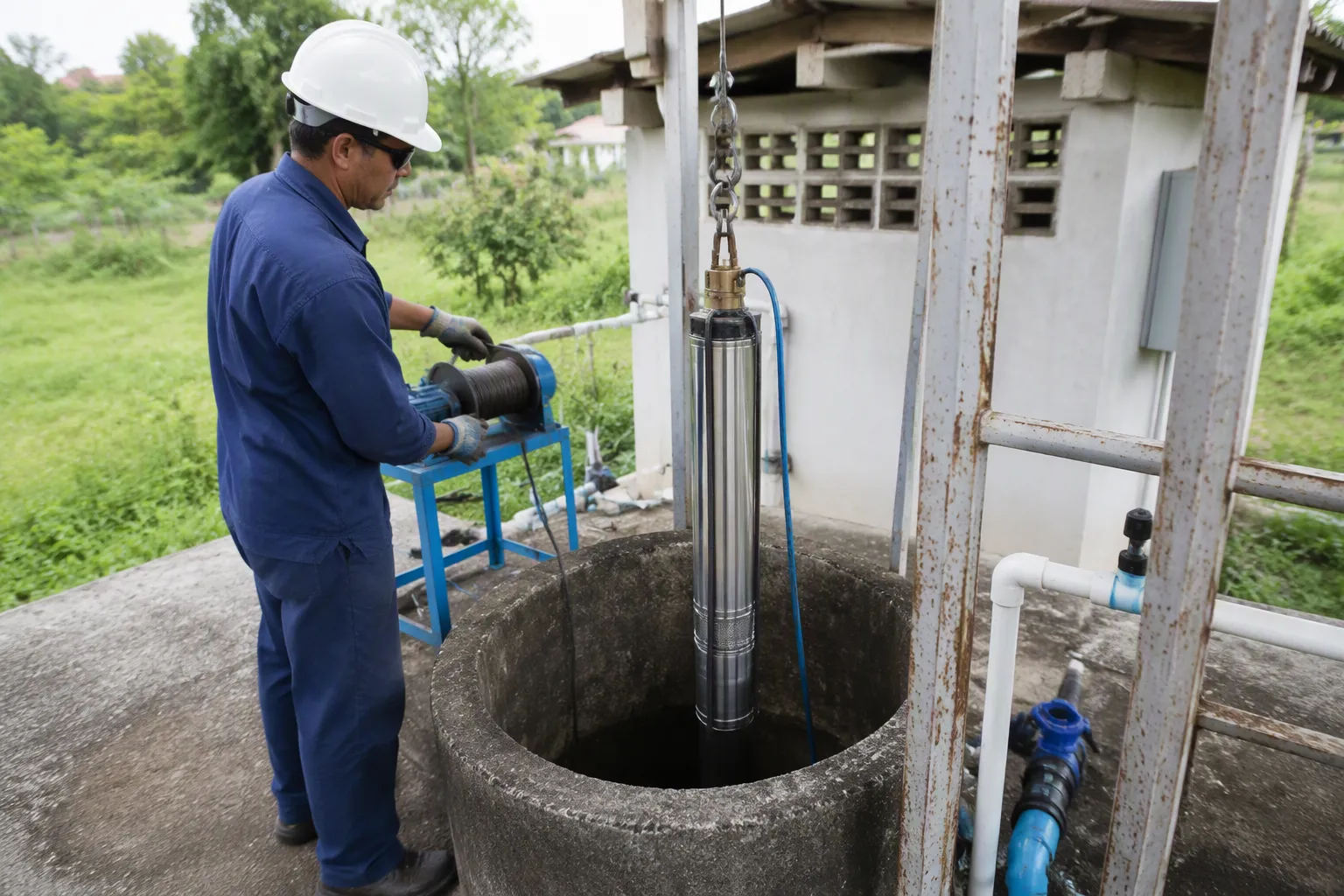
A submersible pump is the best type of pump for a deep well. This answer holds for most residential wells because the pump sits below the water line and pushes water up. A jet pump pulls water from above, and that design limits how deep it can reach.
Why Submersible Pumps Win
For wells deeper than about 25 feet, a submersible pump becomes the practical choice. Jet pumps rely on suction. Atmospheric pressure cannot lift water more than about 25 feet, so a jet pump simply cannot serve a deeper well. A submersible pump avoids this physical limit because it operates underwater and pushes water upward.
For wells deeper than 100 feet, submersible pumps are the only practical option. Many deep well submersible pumps work in wells up to 400 feet deep. That range covers almost every residential well in the country.
The efficiency gap matters too. At 50 feet, a submersible pump reaches 50–65% wire-to-water efficiency, while a jet pump manages only 30–45%. That difference means a jet pump needs roughly 20–35% more electricity for the same flow. A submersible also maintains prime naturally, runs quieter, and lasts longer. You can expect 15–25 years of service from a submersible well pump, compared with 10–15 years from a jet pump.
These advantages explain why submersible pumps dominate deep installations. When you compare types of deep well pumps, the submersible design wins on efficiency, pressure, and lifespan.
When a Jet Pump Still Works
A jet pump remains a valid option for shallow wells and low-to-medium flow. A shallow-well jet pump handles water within 25 feet of the pump. It delivers 5 to 20 GPM at 40–60 psi and comes in 1/2 HP to 1-1/2 HP models. The 25-foot limit comes from atmospheric pressure, not horsepower. No motor size can overcome it.
A deep-well jet pump with a twin-pipe ejector reaches farther, but efficiency drops as depth increases. Near 100 feet, flow can become inconsistent, and cavitation or air entrapment becomes a risk. For wells deeper than 100 feet, a submersible pump becomes the only practical option.
Use this simple guide to match the pump type to your well:
Water within 25 feet of the pump: shallow-well jet pump
Water 25 to about 100 feet below the pump: deep-well jet pump
Water more than about 100 feet below the pump: submersible pump
One detail often confuses buyers. The 25-foot limit measures the distance from the pump to the water surface, not the total well depth. A 200-foot-deep well with water only 20 feet below ground can still use a shallow-well jet pump. A 60-foot well with water 30 feet down cannot.
So the best pump for your deep well depends on where the water sits, not just how far you drilled. Check the static water level first. If that number exceeds 25 feet, start shopping for a submersible. If it exceeds 100 feet, a submersible is your only real choice. A licensed contractor can confirm the measurement and recommend the best submersible well pump for your flow needs.
Types of Water Well Pumps Compared
You will find two main types of water well pumps on the market today. Each design solves a different problem. Understanding how they work helps you pick the right one for your well.
Submersible Pumps Explained
Submersible pumps are designed to be submerged in water. They sit deep inside the well casing, well below the water line. This placement lets them push water to the surface instead of pulling it. A deep well submersible pump can work in wells up to 400 feet deep, and some models reach even farther.
These pumps resist rust and keep your water safe to drink. The body often uses SS304 stainless steel, a food-grade material with a passive chromium-nickel layer. This layer blocks corrosion and stops iron from leaching into your water. Certified engineering plastics meet NSF/ANSI 61 standards, and certified synthetic rubber parts are potable-water-safe, so they add no taste, odor, or chemicals. A hermetically sealed motor housing with gaskets and O-rings creates a barrier between internal lubricants and your well water. A two-chamber design separates the water-handling end from the sealed motor end. The cable entry uses an epoxy-filled or compression-gland seal to stop water from wicking into the motor.
Jet Pumps Explained
Jet pumps are above-ground units. They sit near the top of the well and pull water by suction. A shallow-well jet pump handles water within about 25 feet. A deep well pump with a two-pipe ejector assembly reaches farther, but efficiency drops as depth increases. The ejector sits down in the well casing, while the pump itself stays above ground for easy servicing.
These pumps suit shallow wells and low-to-medium flow needs. If your water sits more than 100 feet down, a submersible well pump becomes the only practical choice. Compare the different types of water well pumps by depth, flow, and installation location before you buy.
Well Depth: The Deciding Factor
Well depth drives every pump decision you make. The number that matters most is not total drilled depth. It is the distance from the pump to the water surface. That measurement sets the limit on what any pump can do.
Shallow Wells Under 100 Feet
A 25-foot cutoff separates the two pump families. Atmospheric pressure at sea level can theoretically lift water about 33 feet. Friction loss in the suction pipe eats into that budget. Add friction loss to the vertical lift, and the combined total must stay under 25 feet at sea level. This figure drops at higher elevations. No larger motor changes this physics.
Pump Type | Operating Principle | Suitable Depth | Key Limitation |
|---|---|---|---|
Shallow Well Jet Pump | Pulls water via suction from above ground | ~25 feet or less | Limited by atmospheric pressure; a bigger motor does not help |
Submersible Pump | Pushes water from inside the well | Deeper than 25 feet | Needs professional installation |
A shallow well jet pump above ground is within DIY reach for a homeowner comfortable with plumbing and electrical work. A submersible pump in any well deeper than 25 feet is not a practical DIY project.
Between 25 and 100 feet, you can still use a deep well pump with a two-pipe ejector. A submersible is often the more efficient alternative at this depth.
Deep Wells Over 100 Feet
Past 100 feet, a jet pump loses efficiency fast. The two-pipe system wastes energy as water circulates down and back up. The pump also struggles to hold venturi pressure at greater depth. For these deep wells, a submersible pump is the professional standard.
Beyond 100 feet, submersible pumps become the only practical option. Many deep well submersible pumps work in wells up to 400 feet deep. Motor horsepower must rise with both depth and flow rate; the right rating depends on your well's static water level and required GPM.
Picking the Best Submersible Well Pump
Flow Rate, Pressure, and Power
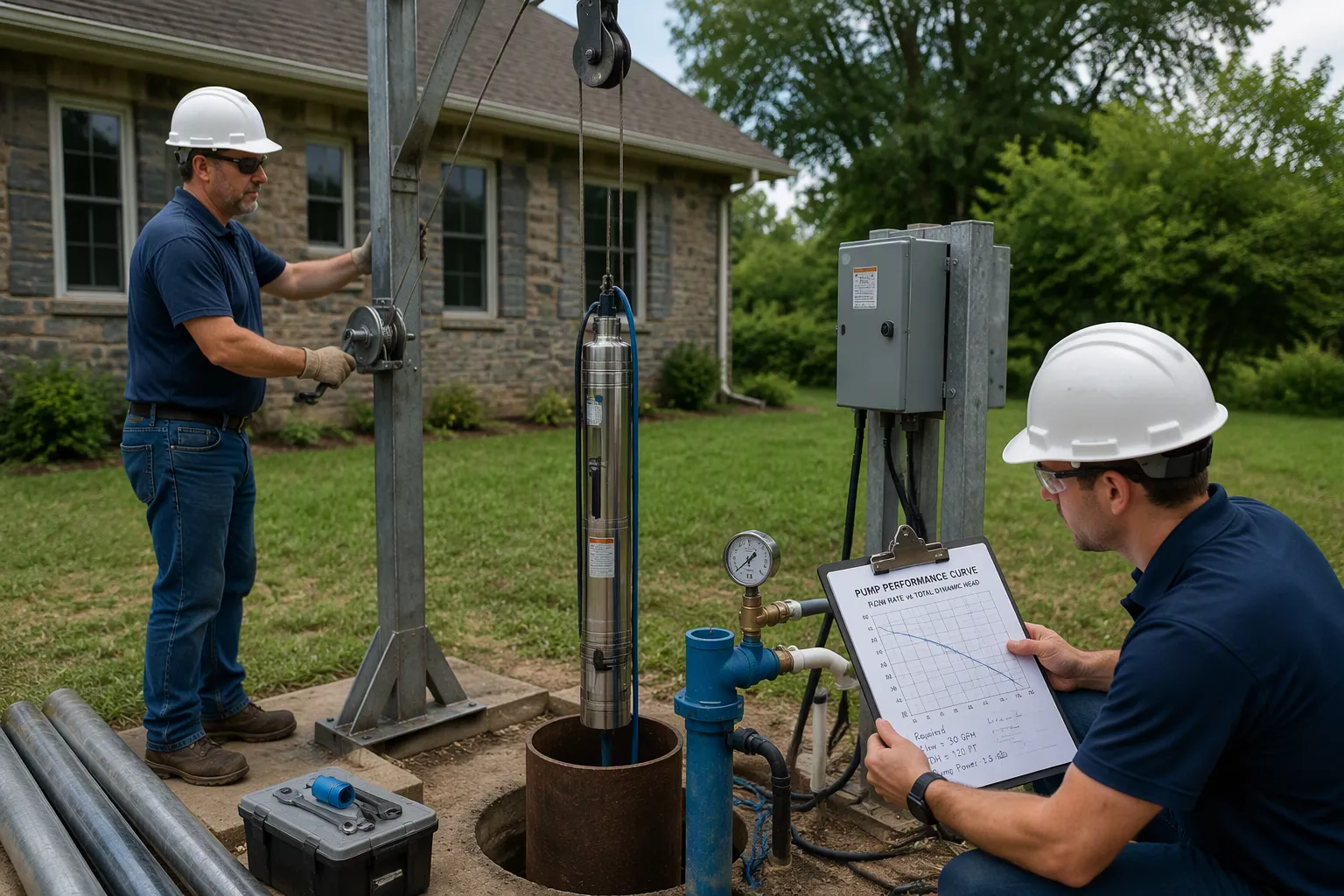
To size a pump, you need three numbers: the well's total depth, the static water level, and the flow rate you want. These factors together decide the horsepower you need. Sometimes an installer can use a smaller pump at a depth where a larger pump would usually go. The reason is total dynamic head. A smaller unit may give the same flow if the static water level is high and friction loss stays low. That is why you cannot size a pump by depth alone.
Total dynamic head puts vertical lift, pipe friction losses, and delivery pressure into one number. As total dynamic head goes up, the pump works harder, and both flow and power use change.
Every submersible pump has a performance curve. The curve slopes down: as flow rate goes up, available head goes down. You find your required total dynamic head on the Y-axis, cross the curve, and read the GPM on the X-axis. Most curves show an efficiency zone. A pump at 50% efficiency uses more electricity than one at 65% efficiency for the same flow.
According to typical residential pump specifications, shallow-well jet pumps deliver 5 to 20 GPM at 40–60 psi, while deep-well jet pumps deliver 3 to 12 GPM at typical depths.
Pump Type
Max Practical Depth
Typical Flow Rate
Installation Location
Shallow-well jet pump
25 ft to water
5–20 GPM at 40–60 psi
Above ground, near top of well
Deep-well jet pump
About 100 ft to water
3–12 GPM at typical depths
Above ground; two-pipe assembly
Submersible pump
500+ ft to water
Selected for required well conditions
Inside the well, below water level
Horsepower measures output, not wall power. A less-efficient motor needs more input power for the same shaft horsepower. Electrical input watts depend on motor efficiency.
Pump Type | Wire-to-Water Efficiency at 50 ft | Energy Input for Same Flow |
|---|---|---|
Jet pump | 30–45% | Requires ~20–35% more electricity |
Submersible pump | 50–65% | Baseline (more efficient) |
Cost, Installation, and Maintenance
Budget matters as much as performance. A deep well submersible pump installation typically costs $1,400–$4,800 for a 0.5–2 HP pump. The average installed cost for a common 4-inch submersible pump in a 100–300 ft well is about $1,900. Total replacement costs range from $900 to $3,000.
Cost measure | Amount |
|---|---|
Average installed cost for a common 4-inch submersible pump in a 100–300 ft well | About $1,900 |
Installed cost range for 0.5–2 HP submersible pumps | $1,400 – $4,800 |
Total replacement cost range for submersible well pumps | $900 – $3,000 |
Professional installer replacement costs range from $2,800 to $6,000. The most common professional-installer quote is about $4,000. These figures usually include parts and labor.
Maintenance keeps your system running. The submersible pump itself needs professional service for inspection or when it fails. The well system around the pump needs regular attention: water quality testing, pressure tank pre-charge, wellhead inspection, and treatment equipment checks. A professional well inspection covering pump motor performance, flow rate, and water level should happen periodically. A regular check helps spot potential issues early, preventing worse and costlier breakdowns.
Several factors affect how often you need service: environmental conditions, water table changes, water quality, and usage patterns. Homes with higher water demand may need service more often. Submersible pumps are less accessible, so they often need professional service for inspection or repair.
Before you buy, weigh flow rate, pressure, power use, cost, and maintenance. Talk to a licensed well contractor for a personalized recommendation. They can confirm your total dynamic head and help you find the best submersible well pump for your needs.
Submersible pumps are still the best choice for deep wells. They give strong pressure and move a lot of water from far down. For any deep well past 100 feet, a submersible beats a jet pump.
Check the depth first. Jet pumps still work for shallow wells, but they can't handle deep wells. Measure the static water level before you buy.
Think about flow rate, pressure, power use, cost, and maintenance. These things decide which submersible pump fits your home. You also need a licensed well contractor to check total dynamic head and suggest the right pump. That mix protects your money and keeps water flowing.
FAQ
Can a jet pump handle a deep well?
No. A jet pump pulls water by suction, and atmospheric pressure limits that lift to about 25 feet. Past 100 feet, efficiency drops and flow becomes inconsistent. For any deep well, you need a submersible pump instead.
How deep can a submersible pump go?
Many deep well submersible pumps work in wells up to 400 feet deep. Some models reach even farther. Beyond 100 feet, a submersible becomes the only practical option for your well.
What size pump do I need for my well?
You need three numbers: total depth, static water level, and desired flow rate. These decide your horsepower. A smaller pump sometimes works where a larger unit would normally go. Consult a licensed contractor for the best submersible well pump.
How long does a submersible well pump last?
You can expect 15 to 25 years of service from a submersible well pump. A jet pump lasts 10 to 15 years. Professional service helps keep your system running well.
Is a submersible pump worth the higher cost?
Yes. A submersible pump installation typically costs $1,400–$4,800 for a 0.5–2 HP pump, with the average installed cost for a common 4-inch pump in a 100–300 ft well about $1,900. At 50 feet it delivers 50–65% efficiency, versus 30–45% for a jet pump. That efficiency saves electricity over time.


