


Introduction to the Difference Between YE2 and YE3 Motors
Views: 0 Author: Site Editor Publish Time: 2026-10-20 Origin: Site


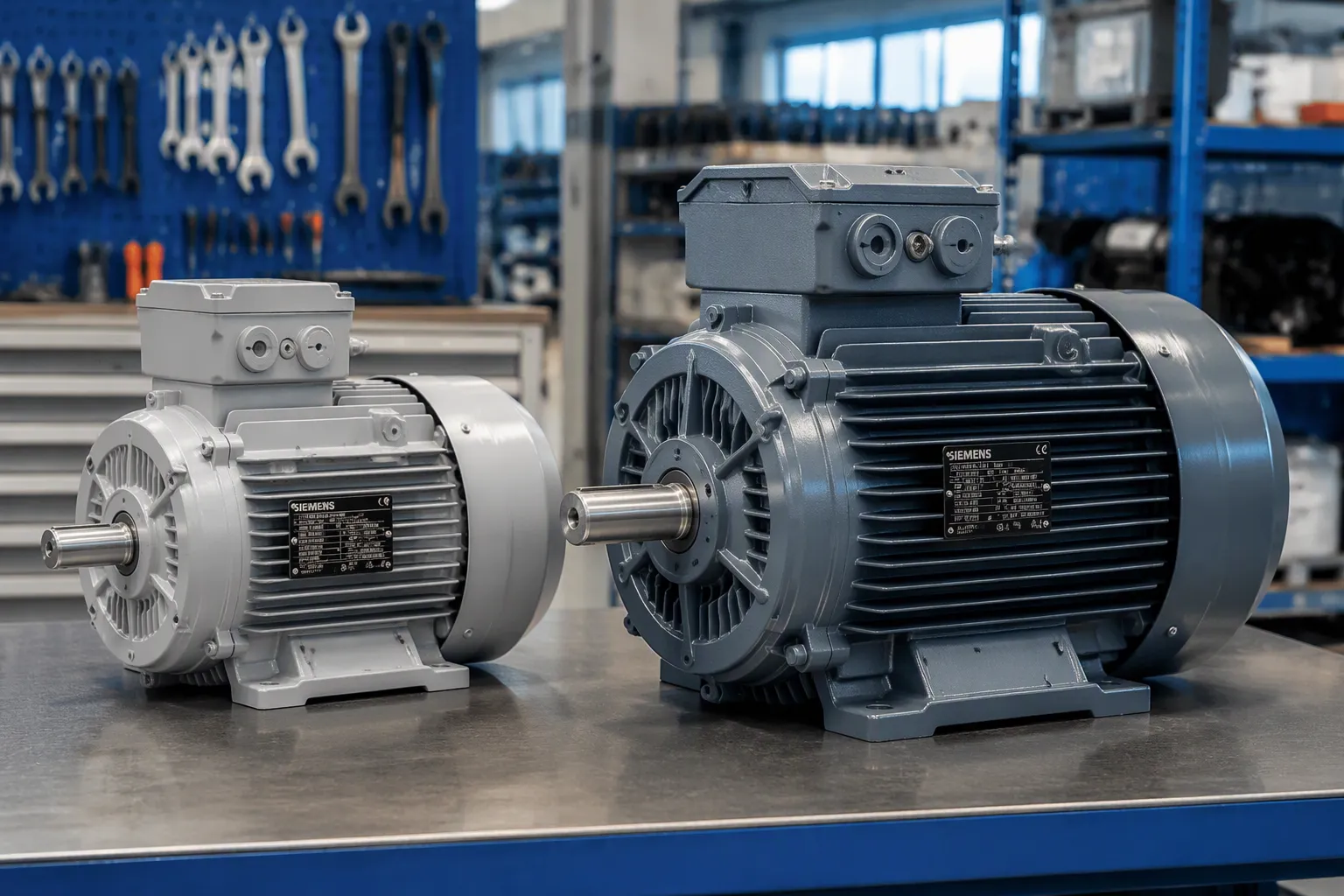
YE3 is a three-phase asynchronous motor with very high efficiency. It is the improved version of the YE2 motor. You simply save energy on every single run. Operating costs go down. YE3 is designed as a higher-grade replacement for the YE2 series. Their classes are different. This post compares them directly on definition, standards, gap, and applications. A structured comparison follows. You will see why YE3 beats YE2 for new industrial projects. Your choice should deliver the same work at a lower operating cost. That advantage matters over years of service. The performance gap becomes clear quickly when you compare the numbers side by side.
Key Takeaways
YE3 motors are more efficient than YE2 motors. They save energy and lower your power bills.
YE3 motors meet IE3 premium efficiency standards. YE2 motors meet IE2 high efficiency standards.
New projects often require YE3 motors. Rules in the EU, China, and US demand higher efficiency.
YE3 motors work well with variable frequency drives. They fit pumps, fans, and conveyors.
Choose YE3 for long-running jobs. Choose YE2 for older setups or short-duty tasks.
YE2 and YE3 Motors: A Quick Comparison
What Is a Three-Phase Asynchronous Motor?
A three-phase asynchronous motor is a tough industrial workhorse. It runs on alternating current sent through three separate phase wires. The stator makes a rotating magnetic field. That field causes current in the rotor. The rotor never catches up to the field, so a steady speed difference stays.
The most common type uses a squirrel cage rotor. A spinning steel cylinder with copper or aluminum conductors inside forms the main design. This build needs no brushes and very little upkeep. The main parts are the stator, rotor, fan, and bearing. The stator holds the iron core and windings. The rotor has its core and shaft. End bells and bearings keep everything lined up inside the frame.
Both classes in this talk are small and medium asynchronous three-phase motors. They are part of the new generation of industrial high-efficiency motors. You will find them in pumps, fans, compressors, and conveyors.
YE2 vs. YE3 at a Glance
YE2 is a high-efficiency motor. YE3 is an ultra-high-efficiency motor. To be exact, YE3 is classified as an ultra-efficient motor. The YE3 line uses copper wire and brand bearings, with cast iron or aluminum housings (cast iron for frames above 160). These specifications mean YE3 can fully replace YE2 and YX3 high-efficiency motors.
Efficiency is the main difference. YE3 is an upgraded version of YE2. It uses new design, technology, and materials to cut energy losses. The high efficiency turns into direct energy savings. On average, YE3 runs more than 3% more efficiently than YE2. That number may sound small; it lowers operating cost over the service life. For continuous operation, the saving grows fast.
Efficiency Standards for YE2 and YE3 Motors
IE2 vs. IE3 Efficiency Classes
A worldwide standard puts motors into energy efficiency classes. The IEC 60034-30 standard sets these levels. You can read the exact definitions here:
International efficiency levels have been defined in standard IEC 60034-30:2008, based on test methods and limits of acceptance indicated under IEC 60034-2-1:2007, as follows: IE1 = standard efficiency (similar to EFF2), IE2 = high efficiency (similar to EFF1), IE3 = Premium Efficiency.
A YE2 motor usually meets the IE2 class. A YE3 motor meets IE3. This gap matters when you compare running costs. The table below shows the yearly energy cost for each class in a continuous-duty job.
Efficiency Class | Annual Energy Cost |
|---|---|
IE2 | €5,806 |
IE3 | €5,684 |
The IE3 motor saves €122 each year over the IE2 motor. That gap gets bigger across a fleet of motors and over many years of use.
What "High Efficiency" Means in Practice
The term high efficiency tells you how well a motor turns electrical power into mechanical work. A YE3 three-phase asynchronous motor loses less power as heat. On average, it runs more than 3% more efficient than a YE2 motor. That gain creates clear energy savings on every run.
You should also know where the real cost sits. Energy use makes up over 95% of a motor's total lifecycle cost. The first purchase price only counts for 2–5%. Efficiency regulations push designers toward higher classes for this reason. When you pick a motor, check the lowest and energy efficiency levels your region requires. The IE3 class now serves as the standard for new pumps, fans, compressors, and conveyors in continuous-duty cycles. A higher class pays you back through lower power bills, not through a lower sticker price.
Key Differences Between YE2 and YE3 Motors
Efficiency Gap and Energy Savings
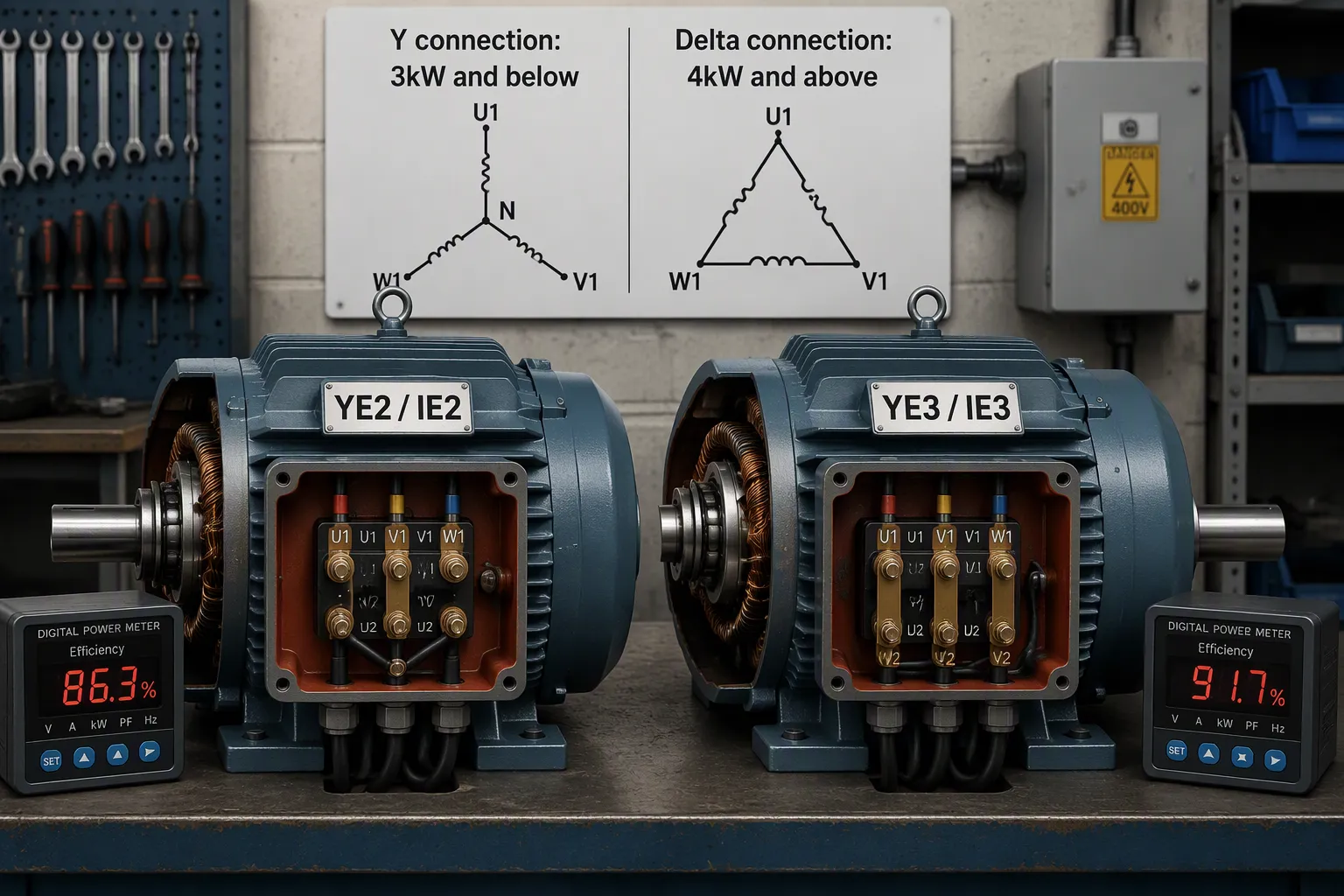
The efficiency class is what makes these two motors different. A YE2 motor meets IE2, which is the high efficiency level. A YE3 motor reaches IE3, the premium level. On average, the YE3 runs more than 3% more efficient than the YE2. That gap lowers your power bill on every run. Over years of continuous duty, the energy-saving effect grows large.
Design and materials create this gain. YE3 motors use premium cold-rolled silicon steel in the core. A low harmonics winding cuts electrical loss. Vacuum pressure impregnation, or VPI, strengthens the insulation during manufacturing. High precision CNC machining keeps tolerances tight. Copper wire and brand bearings round out the build. The frame material can be cast iron or aluminum, and frames above 160 use cast iron. These choices push the motor energy efficiency standard higher.
The design also reduces electromagnetic, thermal, and mechanical losses. That means less wasted energy and more mechanical power from the same electrical input. This is why the YE3 counts as the upgraded version of the YE2.
Wiring and Connection Differences
Both classes follow the same connection logic. A Y-connection joins the winding ends at a common star point, while a delta-connection connects the windings end-to-end in a closed triangle. This logic applies to the YE2 and YE3 lines alike.
The terminal box layout differs between the two connection types. The table below shows the main points.
Aspect | Wye (Y) connection | Delta (Δ) connection |
|---|---|---|
Terminal-box shape | Winding ends join at a common star point. | Windings connect end-to-end in a closed triangle. |
Neutral point | A neutral group exists. | No neutral point exists. |
Line-terminal wiring | Line leads connect to free winding ends. | Each line terminal connects to a junction of two windings. |
The WYE/star circuit has a neutral point, allowing both line-to-neutral and line-to-line connections. The Delta circuit has no neutral wire; its phase loads are connected in a closed triangle, which is why the terminal box for a delta-connected motor has no star/neutral group and is often used when high starting torque is needed.
The three-phase asynchronous motor in both classes follows this wiring logic. A three-phase supply feeds the stator, and the asynchronous rotor follows the rotating field. The YE3 adds its efficiency gains on top of this shared platform. That combination of higher efficiency and proven wiring makes the YE3 the clear upgrade.
Choosing Between YE2 and YE3 for Applications
Where YE2 Motors Still Fit
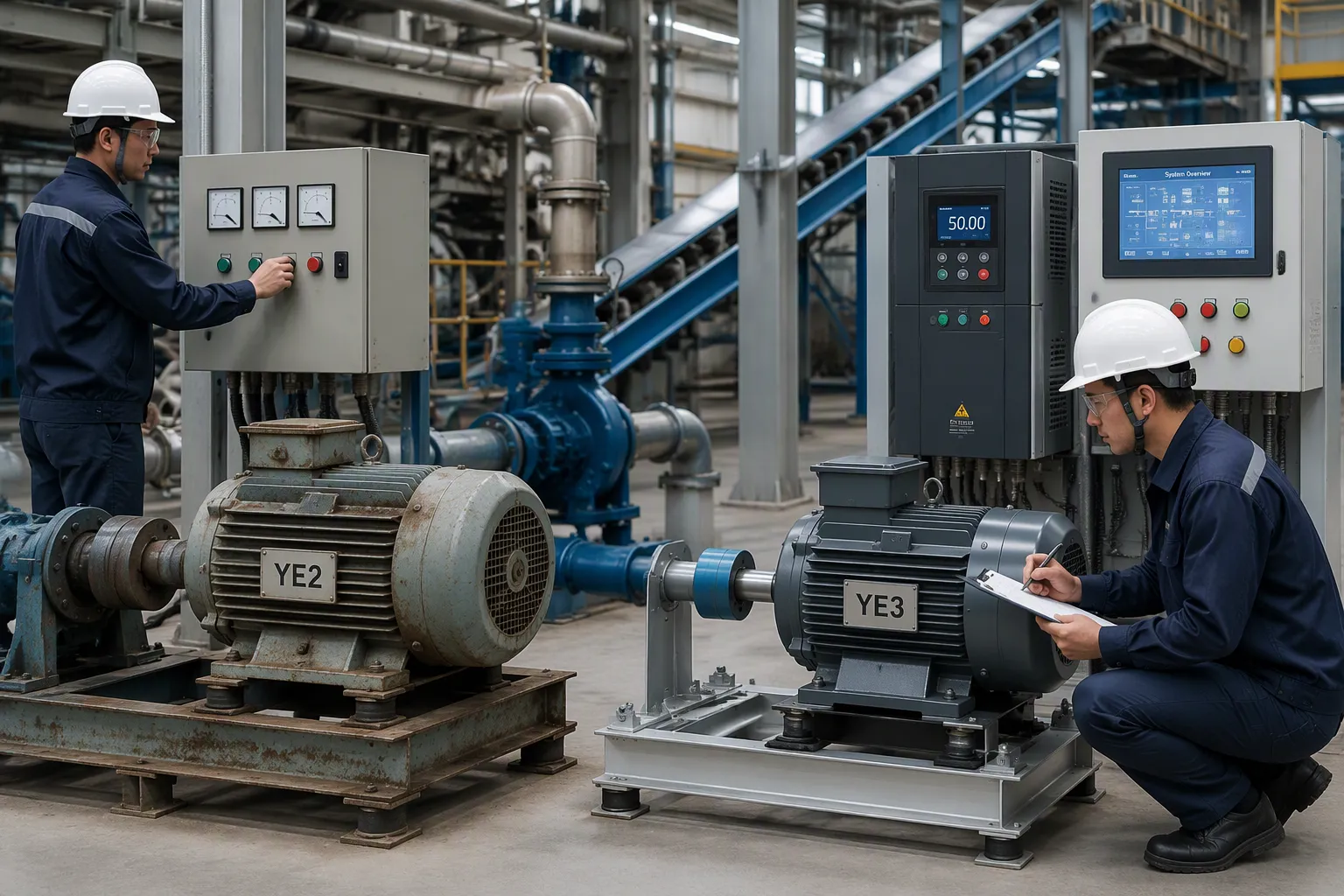
A YE2 motor can still be a good choice in some cases. You might have an older line with equipment that is already set up for the YE2 class. Putting in a new unit may cost more than the power you save. Projects with tight budgets also like YE2 when the motor runs only a short time. A motor used a few hours a week will not pay back the higher price of an IE3 unit. In these cases, the regular high-efficiency motors of the YE2 class are still a smart pick.
You should check your local rules first. Some areas still allow IE2 as the lowest standard. Others have banned it for new setups. If your area allows it and your runtime is low, YE2 can work as a fair short-term fix.
Why YE3 Motors Are Preferred Today
New setups almost always call for the YE3 class. Stronger energy rules are behind this change. Regulatory mandates and attractive lifecycle savings make IE3 the preferred efficiency class. These policies leave little room for the older class in new projects.
The money side also favors YE3. Energy use makes up over 95% of a motor's lifecycle cost. A higher efficiency class cuts that bill on every run. The table below shows where these units often go.
YE3 motor category | Common installation |
|---|---|
Variable frequency motors | |
Brake motors | Lifting and positioning tasks |
Explosion-proof motors | Hazardous environments |
Gearbox-coupled units | Heavy-duty machinery in mining and manufacturing |
A three-phase asynchronous motor in the YE3 class also works well with variable frequency drives. That combo fits HVAC systems, machining tools, and assembly lines. The higher efficiency and lower energy draw make YE3 the clear pick for any new three-phase job.
You now have a clear picture of both motor classes. YE2 is a high efficiency three-phase asynchronous motor. YE3 is the ultra-high-efficiency upgrade. YE3 meets IE3. YE2 meets IE2. That efficiency class gap gives YE3 an average efficiency gain above 3%. The gain cuts energy costs on every run. New installations favor YE3 for this reason. Older or budget-tight setups may still use YE2.
Use this comparison as a checklist. Match the motor class to your runtime, local rules, and budget. A long-duty motor rewards the higher class. A short-duty job may not. Pick the motor that balances purchase price with lifetime power cost.
FAQ
Can you swap a YE2 motor for a YE3 motor without changing the mount?
Yes, in many cases. The YE3 is designed as a higher-grade replacement for the YE2 and YX3 series, so it can fully replace a YE2 motor in existing installations. Check your control panel settings before you install the new motor.
Does a YE3 motor always save money over a YE2 motor?
A YE3 motor saves money when you run it often. The efficiency gain averages more than 3% over a YE2 motor. Energy use makes up over 95% of a motor's lifecycle cost. A short-duty job may not pay back the higher price.
What efficiency class does each motor meet?
A YE2 motor meets the IE2 class, which is high efficiency. A YE3 motor meets IE3, which is premium efficiency. The IEC 60034-30 standard defines these levels. A higher class means lower power losses on every run.
Do YE2 and YE3 motors use the same wiring rule?
Yes, both follow the same connection logic. A Y-connection joins the winding ends at a common star point, while a delta-connection connects the windings end-to-end in a closed triangle. This logic applies to the YE2 and YE3 lines alike. The terminal box layout differs between the two connection types.
Why do new projects prefer YE3 motors today?
New rules push for higher efficiency. Regulatory mandates and attractive lifecycle savings make IE3 the preferred efficiency class for most new motors. A three-phase asynchronous motor in the YE3 class also works well with variable frequency drives. That combo fits pumps, fans, and conveyors.


